
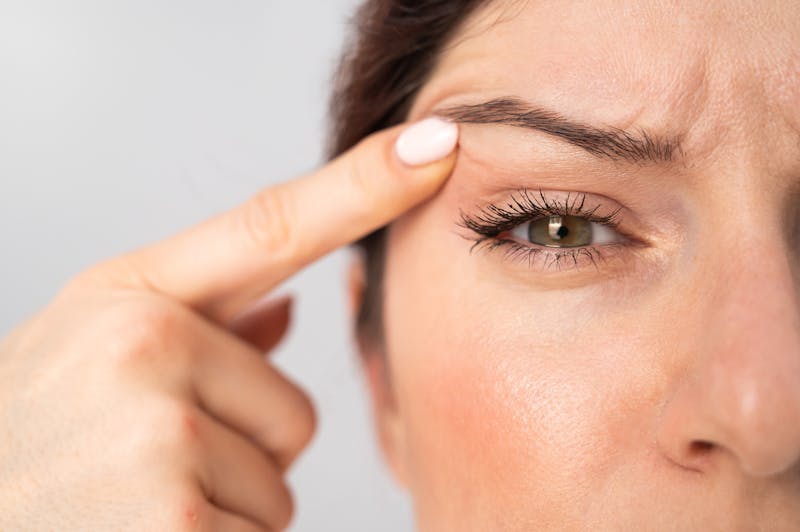
Hooded eyelids are one of the most common but misunderstood aesthetic concerns evaluated. What many patients describe as “extra eyelid skin” is often the result of brow descent, not the eyelids themselves. Distinguishing between these two causes requires advanced knowledge of upper face anatomy and experience in performing both brow lift and eyelid surgery.
Weber Facial Plastic Surgery, led by Dr. Stephen Weber, a double-board-certified facial plastic surgeon, specializes exclusively in facial and neck procedures. He has extensive experience with brow lifts, upper eyelid blepharoplasty, and combined surgeries, addressing both aesthetic balance and functional vision issues. This specialization ensures effective corrections and natural results.
In this blog, we’ll clarify what exactly hooded eyelids are, what your aesthetic options are, and why Weber Facial Plastic Surgery is an excellent choice for your Denver brow lift experience.
What Are Hooded Eyelids?
Hooded eyelids occur when tissue drapes over the upper eyelid crease, creating a heavy or closed appearance to the eyes.
Clinically, this can result from several different anatomical factors. The most common causes include:
- Brow descent (brow ptosis), where a low or sagging brow pushes tissue downward onto the upper eyelids
- Excess upper eyelid skin (dermatochalasis)
- Eyelid ptosis, in which the eyelid margin itself droops due to muscle weakness
We cannot stress the importance of identifying the true anatomical source of hooding, as brow-related hooding and eyelid-related hooding require different surgical solutions.
How Brow Position Affects Hooding
The brow is a structural support for the upper eyelids. As it descends due to aging, genetics, or muscle imbalance, it can compress the eyelid skin, reducing the visible eye opening.
A low or sagging brow can:
- Push skin onto the upper eyelids
- Create a tired, stern, or heavy appearance
- Cause patients to unconsciously raise their eyebrows to compensate
- Contribute to deeper horizontal forehead lines over time
When a Brow Lift Helps Most
A brow lift is most effective when hooded eyelids are primarily caused by brow descent, rather than excess eyelid skin alone.
In Dr. Weber’s clinical experience, patients are most likely to benefit from a brow lift if:
- The brows sit at or below the orbital rim
- Hooding improves when the brow is gently lifted during examination
- The outer portion of the brow has descended more than the inner brow
- Forehead muscles are chronically overactive from trying to keep the eyes open
When You May Need Eyelid Surgery Instead
Upper blepharoplasty is often the better option when the primary issue is redundant eyelid skin or true eyelid ptosis, rather than brow descent.
Upper eyelid surgery may be recommended under the following circumstances:
- Brow position is stable and appropriately elevated
- Excess skin is isolated to the eyelids
- The eyelid margin sits lower than normal due to levator dysfunction
Combining Brow Lift and Blepharoplasty
For some patients, the most natural and balanced result is achieved by combining a brow lift with upper eyelid surgery.
At Weber Facial Plastic Surgery, this approach is considered when:
- Brow descent and eyelid skin excess both contribute to hooding
- Treating only one area would leave the upper face unbalanced
- The goal is comprehensive upper-face rejuvenation rather than partial correction
Ideal Candidates for a Brow Lift
Based on clinical evaluation, ideal brow lift candidates often demonstrate:
- Low or asymmetric brows
- Deep forehead lines from chronic brow elevation
- Hooding that improves when the brow is manually lifted
- A heavy or fatigued appearance centered in the upper face
Types of Brow Lift Techniques
Because there is no single brow lift technique that works for every patient, Dr. Weber tailors his surgical approach to each patient's specific brow position, hairline height, and degree of brow descent. Customization at this stage preserves natural expression while avoiding overexaggeration.
Common approaches include:
Endoscopic brow lift
This minimally invasive technique uses small, hidden incisions behind the hairline and a tiny camera for precise brow elevation. It preserves natural expression and minimizes visible scarring, making it ideal for patients with mild to moderate brow descent and sufficient hair density.
Limited-incision brow lift techniques
Limited-incision techniques target specific areas of the brow, usually the outer corners, to address pronounced hooding. They offer subtle refinements with shorter incisions and focused corrections.
Coronal or hairline-based brow lifts (in select anatomical cases)
For patients with significant brow descent or specific hairline concerns, a coronal or hairline-based approach may be suitable. These methods provide better access to forehead tissues and can be planned to minimize changes to the hairline. When used thoughtfully, they offer effective, lasting correction while ensuring a natural look.
Recovery and Downtime Expectations
Most patients can expect:
- Swelling and bruising for 7–10 days
- Return to work or light social activity in about one week
- Continued refinement over several weeks
- A photo-ready appearance for many patients within a few weeks
Potential Functional Benefits
In patients with significant brow descent, a brow lift may provide both functional and aesthetic improvements. Potential benefits include:
- Improved peripheral vision
- Reduced eye fatigue
- Less need for compensatory eyebrow elevation
How to Know What’s Right for You
Determining whether a brow lift, eyelid surgery, or a combination approach is right requires a hands-on evaluation by a facial specialist.
At Weber Facial Plastic Surgery, this includes:
- Detailed facial and brow analysis
- Photographic documentation
- Assessment of brow position at rest and with movement
- A personalized discussion of timing and surgical options
Because Dr. Weber’s practice is dedicated exclusively to facial surgery, treatment recommendations are grounded in experience, restraint, and long-term outcomes.
If hooded eyelids are affecting how you look or how you see, a thoughtful consultation is the first step. Contact us today to schedule an appointment.